Electricity Supply and the NEM

This is the first article in our informative series on the energy market. We’ll start with some foundations – a basic explanation of the Australian National Electricity Market (NEM) and how it functions. Later articles in the series will build on this topic and discuss the electricity supply curve, negative spot prices, inertia, frequency, and how energy storage can support the NEM.

What is the NEM[i]?

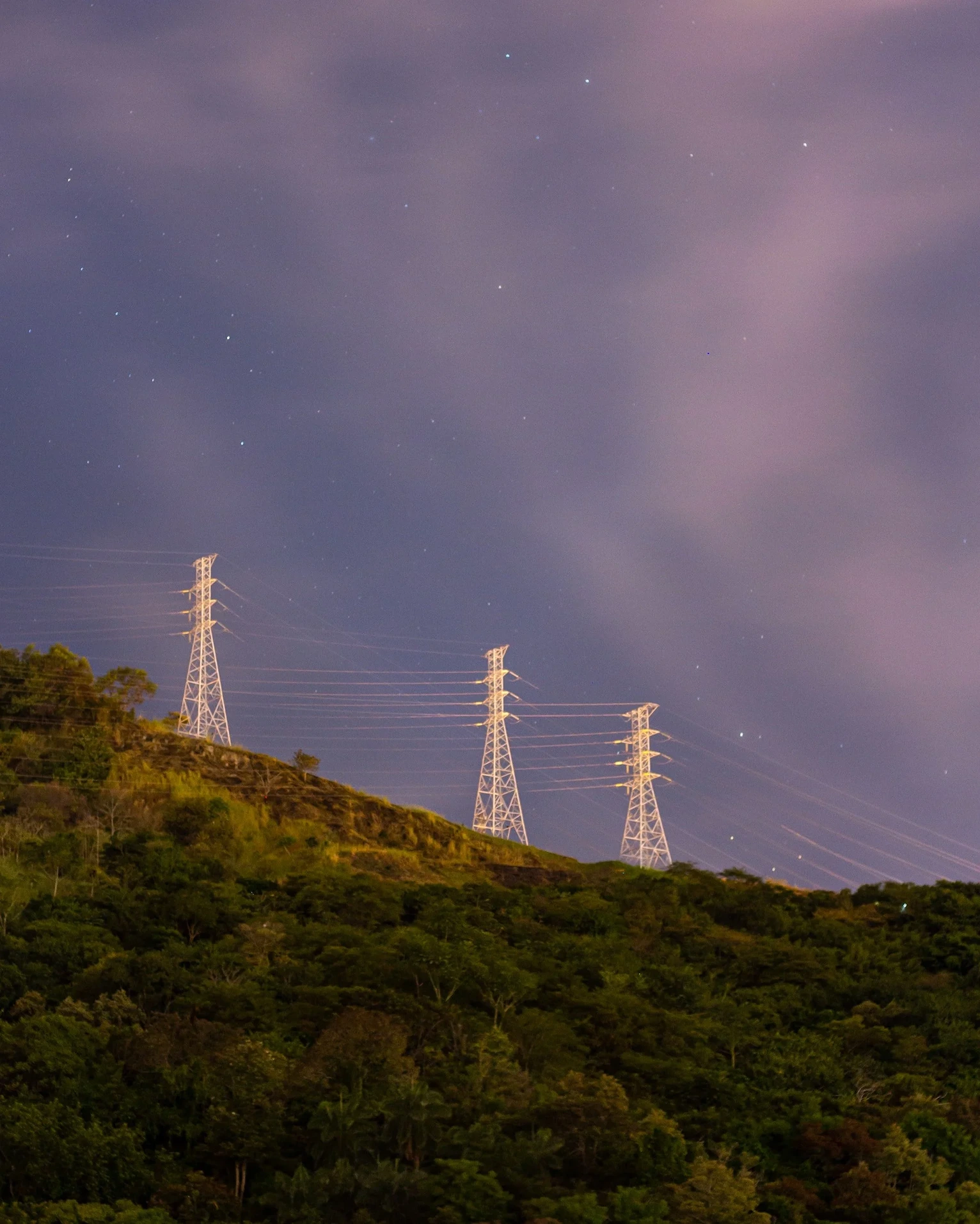
NEM is short for National Electricity Market. Despite its name, the NEM is not Australia-wide; it includes five states, Queensland, New South Wales, Australian Capital Territory, South Australia, Victoria, and Tasmania. The NEM is both the physical electricity transmission infrastructure (i.e. the network of poles, wires, and other infrastructure) that connect those states, and the energy marketplace, which is operated by the Australian Energy Market Operator (AMEO). The total distance of the NEM is around 5000 km and includes the transmission network that carries power from generators to large industrial users and local energy electricity retailers (companies you buy electricity from for your home).
What is the AEMO?

AEMO stands for the Australian Energy Market Operator (AEMO) and is the organisation that manages the electricity market, ensuring that supply is matched with demand simultaneously. It’s an extremely important role; without an exact match of electricity, the physics of a power system mean that blackouts and system failures could happen. AEMO manages both the NEM and the Wholesale Electricity Market (WEM) which is the electricity market in Western Australia. AEMO itself does not buy or sell electricity, it manages and facilitates the wholesale market of around 30 retailers and over 100 generation companies.

What does the market look like?

The NEM is the marketplace is where generators sell electricity and retailers buy it. Retailers then resell electricity to businesses and households. AEMO manages this market in five-minute settlements (5MS), meaning that every 5 minutes AEMO matches a dollar amount that a generator is willing to sell electricity for, to a dollar amount that a retailer is willing to pay for that electricity. The amount which is matched is the market clearing or spot price. AEMO also ensures there’s an adequate reserve on standby in case a generator fails to provide its forecast amount, which ensures system security. States within the NEM have their own price region and don’t bid against each other.

What are spot prices[ii]?

There are two ways to buy and sell electricity in the NEM wholesale market: through the spot market and the contract market. All electricity in the spot market is bought and sold at the spot price.

The spot price is determined by AEMO and it is price where the amount willing to sell and buy is matched in the marketplace. It’s also a mechanism to tell generators how much electricity is needed in the market at any time. As a general principle, if the spot price is low, supply usually outweighs demand, and if the spot price is high, demand usually outweighs supply.

You can find the live spot price here.

Does the spot price have a fixed cap?

The Australian Energy Market Commission (AEMC) sets the market cap and a market minimum, which is adjusted every year in line with the consumer price index as according to the National Electricity Rules (NER). The market price cap for 1 July 2022 to 30 June 2023 is $15,500 / MWh[iii].

The AEMC is essentially the rule maker for Australian electricity and gas markets. They make and amend Australia’s National Electricity Rules, National Gas Rules, and National Energy Retail Rules, as well as provide market development advice to governments[iv].

A spot price cap is in place to ensure any extreme spot prices can be moderated. In future articles, we’ll be exploring what situations can cause extreme prices.

Energy Generation Mix

The NEM began operations in the electricity spot market in late 1998. Since then, the total electricity generation capacity has grown and during the financial year 2021-22 the NEM generation capacity was 53,538 MW[v]. In the last year, between 28.4% and 45.5% of the energy generation in the NEM was from renewable generators. Find the real-time energy mix on AEMO, and compare historical consumption and generation with this tool.

How is Electricity Transported?
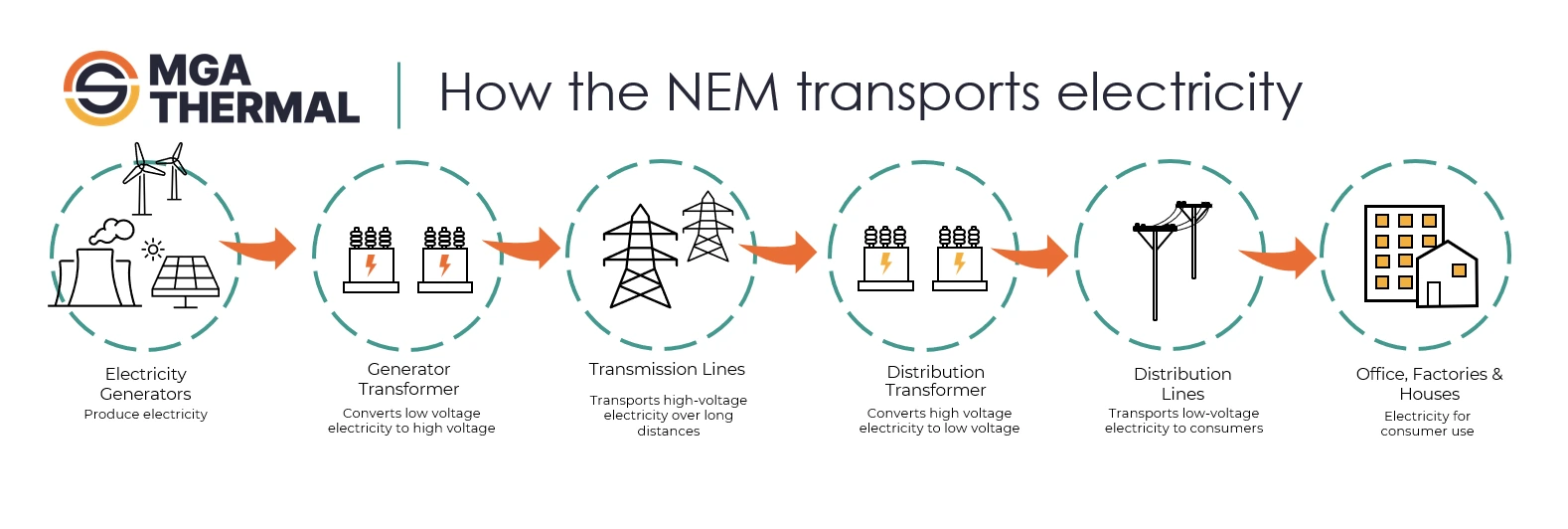
To help visualize the NEM and how electricity travels, we’ve put together a step-by-step, beginning with generation. Bear in mind, this is a simplified visualisation of a very complex system.

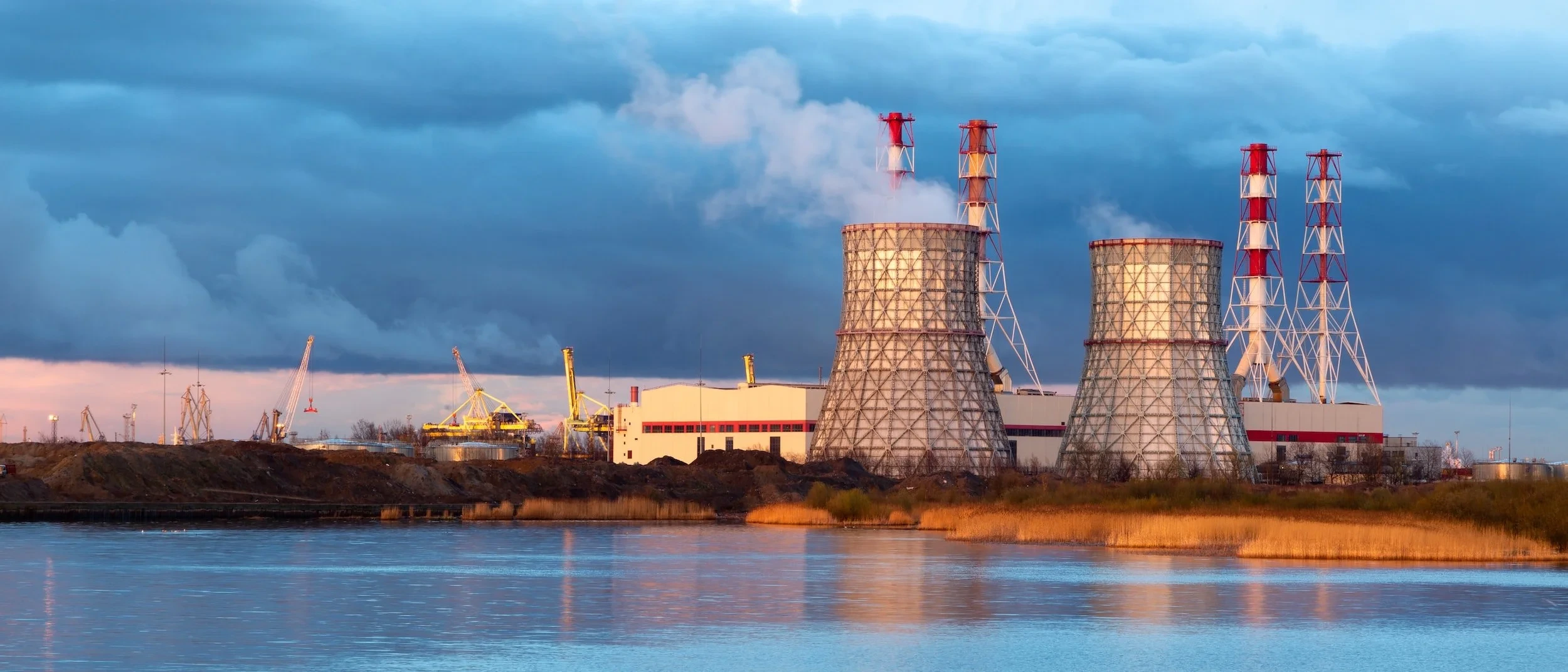
  1. Generators: Electricity is generated through a range of sources. Historically, a large proportion of power has come from base-load fossil fuel generators. More recently the generation mix has been diversified and renewable power generation has been increasing. Regardless of how the energy is generated; points of generation are often located some distance away from the point of use (industrial or domestic).
  2. Prepared for transport: The electricity is put through a transformer to increase its voltage for efficient long-distance transport.  
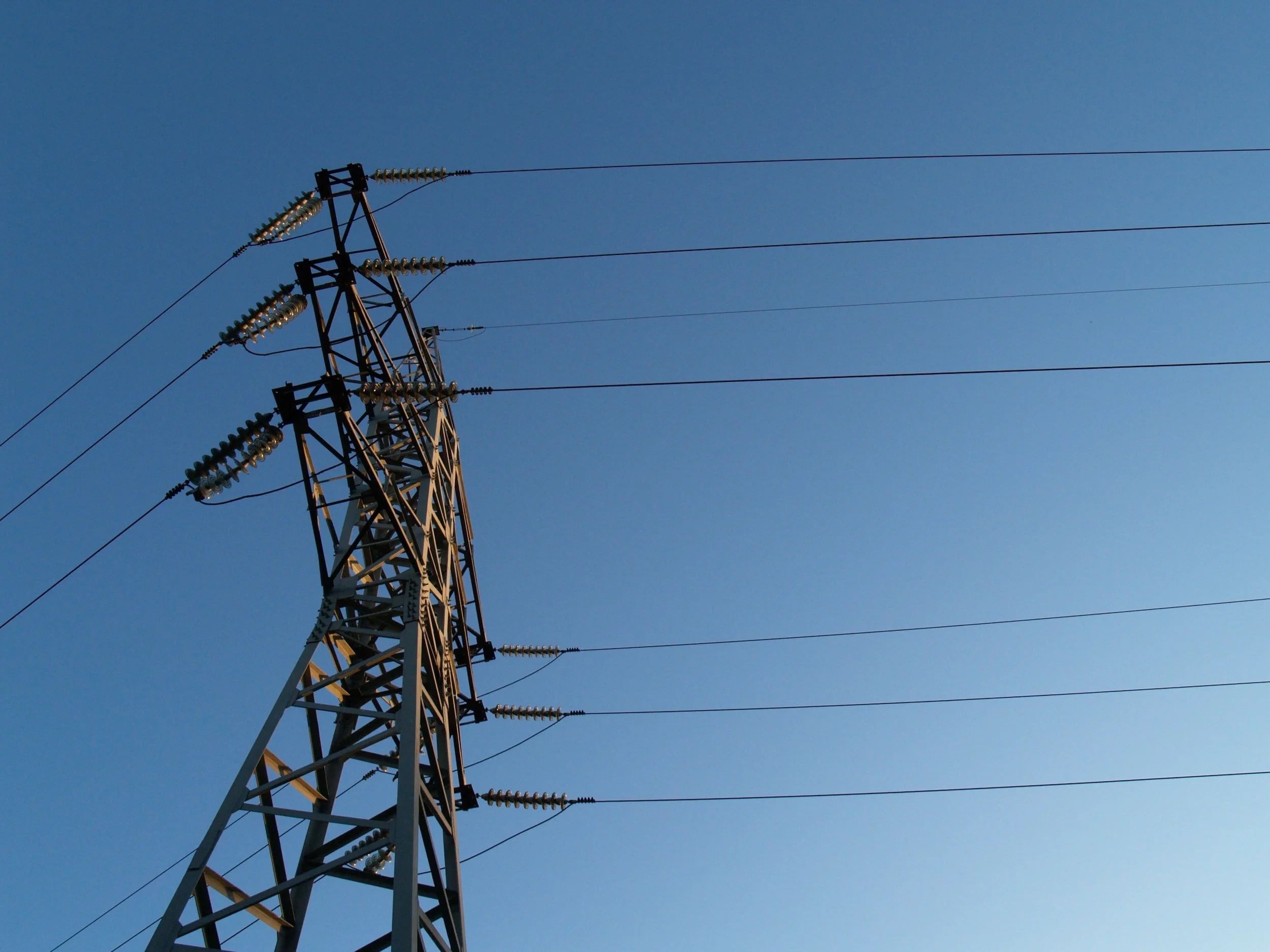
  3. Long-distance transport: The high-voltage power is then sent through transmission lines. These are the very big, tower-like lines you see between power stations and cities.
  4. Point of Distribution: The transmission lines take high-voltage electricity to a point of distribution. Here, the power is converted to a low voltage through a distribution transformer for local use.
  5. Short-distance transport: Transporting the low-voltage electricity from the distribution transformer to the consumer is achieved through distribution lines. These are the power lines you see on suburban streets.
  6. Arrival for use; Consumers can be domestic and commercial level (i.e. homes and offices) or industrial (i.e. factories). However, some industrial consumers receive their electricity at high voltage due to power-intensive processes.

Advancements in renewable energy in the last few decades have complicated this generator-to-consumer path. Domestic-level rooftop solar photovoltaic cells and batteries can also provide electricity to the grid, creating a bilateral flow of electricity. We will discuss the complexity of adding these points of generation and storage in another upcoming article – it’s different from the traditional system outlined above.

AEMO has fantastic educational resources; visit their website here. And view the AEMO Fact Sheet on the NEM.

Published 16 January 2022 - Arden Jarrett

A version of this article was originally published on 2 December 2020.

Industrial Heat Alternatives: 5 Things to Consider When Choosing the Right Energy Solution

Industrial manufacturers are navigating a rapidly shifting energy landscape. Rising energy costs, fuel supply shortages, tightening emissions targets, and continuous uptime demands. In response, many industrials are rethinking how they generate the process heat that underpins their operations. But with a growing range of technology pathways available, identifying the right solution is far from straightforward.These five considerations will help you cut through that complexity and make more confident, future-ready energy decisions.1. Define Your Desired Future State and Work BackwardsUnderstanding your long‑term energy demand is essential - not only today’s heat requirements, but the growth trajectory of your site and the “future state” you ultimately need to reach. This clarity helps determine which technologies can genuinely support your site over time. They must be able to:‍Deliver high grade process heat on a continuous basis, without impacting operationsEliminate or substantially reduce reliance on fossil fuelsOperate at high round-trip efficiency, minimising unutilised waste heat on-siteIntegrate in a hybrid configuration, compatible with existing and emerging technologies Not all technologies will meet these requirements equally. For example, heat pumps and mechanical vapour recompression are highly efficient for low temperature and low-pressure applications, but they require complex process redesign and rely on a reliable source of waste heat to be economic. Starting with the desired future state, then working backwards to determine the right technology mix for your site ensures that your investment aligns with long-term goals.2. Focus on Total Cost of Ownership - Beyond Simple Payback‍While simple payback is still commonly used, its narrow focus often favours cheaper, short-lived or sub-optimal options that look attractive upfront yet cost more over time. Total Cost of Ownership (TCO) provides a more comprehensive and accurate assessment of investment’s true value.TCO captures the full lifecycle of an asset - installation, operating and maintenance costs, expected savings, and asset replacement - giving a clearer picture of long-term profitability. It also accounts for risks such as fuel price escalation or equipment failure rates, and aligns with financial metrics including Net Present Value and Internal Rate of Return used by investors and government programs. Considering the complete cost picture helps industrials make more informed and sustainable investment decisions.3. Emerging Funding Opportunities and Commercial ModelsThere are several significant funding opportunities at state and federal levels in Australia to support industrials to adopt renewable technologies and reduce reliance on fossil fuels. Grant funding can move the needle on the commercial viability of your project, so be sure to check out what programs are relevant to your facility.Commercial models are also emerging to address the capital constraints industrials may have. For example, Heat as a Service is a type of third party financed contract that removes the upfront capital cost of infrastructure and replaces it with a predictable, performance-based payment. The provider manages the turnkey construction of the equipment and handles all maintenance, repairs, and optimisation for the end-user. These emerging commercial models can support industrials to overcome investment hurdles.4. Ease of Integration with Existing InfrastructureMost industrials have invested heavily in their current systems, and many of these assets continue to operate reliably. Minimising disruption and downtime is a priority. The most attractive solutions:Retrofit into existing boiler houses or steam networks without costly process redesignAllow staged deployment to manage risk and investment Complement existing assets and emerging technologiesTechnologies that can integrate with existing boiler houses and deliver steam at the required setpoint temperature and pressure significantly reduce the need for process redesign. Understanding the integration implications of a technology will help industrials avoid unforeseen and costly overhauls.5. Energy Storage Delivers Operational Resilience and Energy SecurityHeat is often mission critical for industrial sites. Any viable alternative must enhance reliability, not compromise it. Consider:Ability to operate during grid constraints or outagesPredictability of fuel or energy supplyThermal buffering or storage capabilitySafety, redundancy, and controllabilityEnergy markets are becoming increasingly volatile. Solutions that integrate long duration energy storage can capitalise on this volatility through load-shifting. This is where energy is stored when it is cheapest and used hours or even days later. This reduces exposure to price spikes and supply constraints, whilst maintaining a reliable and continuous supply of process heat to the site. A Practical Pathway to Low-Carbon SteamAs industrial manufacturers evaluate their options, thermal energy storage is emerging as a practical enabler of industrial electrification. MGA Thermal’s technology is designed to integrate with existing boiler houses, smooth electricity demand, and deliver reliable, low cost, high-temperature heat using renewable energy. By decoupling heat production from electricity supply, industrials can reduce emissions, stabilise operating costs, and transition toward net-zero steam without major process disruption.Curious how thermal energy storage could work for your site? Get in touch: contact@mgathermal.com

Read Now
News/Insights
June 22, 2026

Why Modern Carbon Accounting Matters - and Why Victoria’s New Proposal Is a Big Step Forward

Australia’s electricity system has changed. Our carbon accounting hasn’t kept up.Every day, we see longer periods where renewable energy is abundant, low cost, and increasingly curtailed. At the same time, emissions intensity swings dramatically in real-time as variable renewable generation fluctuates across the day.Yet our current carbon accounting frameworks do not reflect this. Current frameworks use an average emissions intensity factor, which represents the average greenhouse gas emissions per kilowatt-hour of electricity in the grid over the previous year. This fails to recognise the real-time variability in the electricity generation mix, and the actual mix of renewable and fossil generation at the time electricity was consumed. And that creates real problems:There’s no incentive for energy users to shift electricity demand to periods when renewable generation is higher and emissions intensity is lower.Users who consume electricity during periods when emissions intensity is low are penalised by the higher average emissions intensity factor.Energy storage technologies that enable flexible demand and support investment in variable renewable generation - including thermal energy storage - are undervalued.In short: our accounting frameworks are no longer fair, effective or relevant.Victoria Is Taking a Meaningful Step Toward Fixing ThisLast week, the Department of Energy, Environment and Climate Action (DEECA) released a proposal to update the Victorian Energy Upgrades (VEU) program - and it includes new measurement methods for industrial heat decarbonisation, including electric thermal energy storage (eTES).By acknowledging the value of shifting energy consumption into cleaner periods, DEECA is opening the door to:More accurate emissions reportingIncentivising flexible demandFaster industrial decarbonisationReduced renewable energy curtailmentIncreased investment in variable renewable energyThis is exactly the kind of policy evolution Australia needs.Have Your Say: Public Consultation Is Now OpenDEECA is now seeking feedback on proposed updates to the Victorian Energy Upgrades program, including new methods for industrial heat decarbonisation. Consultation is open until 11:59pm, Tuesday 28 April. Full details and submission options are available here: https://engage.vic.gov.au/industrial-heat-decarbonisationMGA Thermal’s PositionAt MGA Thermal, we strongly support DEECA’s leadership in bringing modern carbon accounting into the VEU program.We believe Australia needs measurement approaches that reward real system impact - not annual averages.We encourage all stakeholders to get involved in this consultation and help move Australia toward a more affordable, sustainable and reliable energy future.

Read Now
News/Insights
April 2, 2026

Energy Security in a Volatile World: Why Industry Must Shift from Fossil Fuels to Renewable Electricity

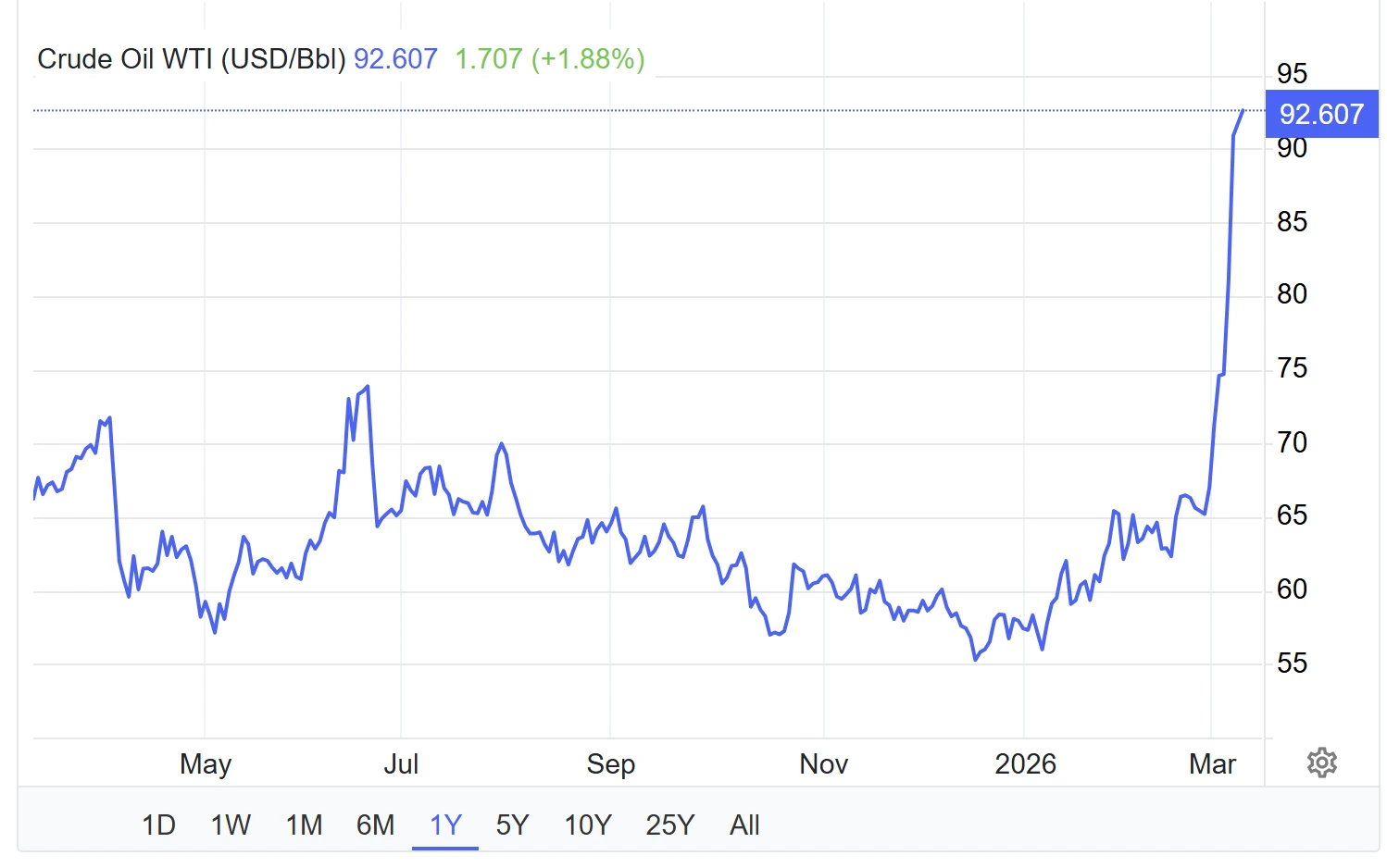
Global geopolitical instability over the past decade has made one thing clear: businesses that rely on fossil fuels are exposed to significant risk.For manufacturers dependent on heat, steam, and high‑temperature processes, this vulnerability is even sharper. When geopolitical shocks hit, oil and gas prices can surge overnight, eroding margins, disrupting production, and undermining competitiveness. Forward‑looking industrial leaders are discovering a compelling pathway to greater resilience and cost stability: electrifying their thermal processes using renewable energy and thermal energy storage. Why Fossil Fuels Create Structural RiskIndustrial sectors such as food manufacturing, chemicals, mining, and building materials have long depended on diesel, LPG, and natural gas. But these fuels come with three unavoidable challenges: Global price volatility - Oil and gas are traded internationally, meaning conflicts, supply disruptions, or shipping constraints can trigger sudden price spikes. Manufacturers feel the impact immediately through higher operating costs and squeezed margins. Geopolitical dependence - Australia imports most of its oil and competes with global buyers for gas. When international LNG prices rise, domestic prices often follow, making long‑term planning difficult. Rising long‑term costs - As economies decarbonise, fossil‑fuel systems face increasing pressure from carbon pricing, compliance requirements, and infrastructure phase‑outs. The Russia–Ukraine war demonstrated how quickly global markets can destabilise, with energy prices surging to decade high levels. We are already seeing the immediate effects of recent conflict in the Middle East with energy prices surging by almost 50% compared to the past 6 months, exposing the fragility of fossil‑fuel‑dependent economies and industries. ‍Why Renewable Electricity Changes the Equation ‍Australia has an abundance of cheap, renewable energy resources, which gives us greater sovereignty and security over its supply. Renewable electricity: isn’t reliant on global commodity marketsdoesn’t spike during geopolitical crisescontinues to fall in cost over time ‍For manufacturers, electrifying heat offers a pathway to long‑term cost stability and greater energy resilience. ‍The Role of Thermal Energy StorageHeavy industry needs reliable and continuous supply of heat. Thermal energy storage (TES) is a storage technology that can firm intermittent renewable energy supply. TES enables manufacturers to: electrify high grade process heatdispatch that heat on demand and around-the-clockreduce reliance on fossil fuels minimise electricity costs through load shifting ‍TES allows factories to run on affordable, reliable and sustainable energy, without any exposure to international geopolitical risks. ‍How Electrification Builds ResilienceShifting thermal processes to renewable electricity supported by storage delivers clear advantages: Predictable energy costs - Renewables are not exposed to global commodity markets.Reduced crisis risk - Businesses have lower exposure to oil and gas price shocks.Stronger competitiveness - Stable energy costs improve planning, pricing, and investment confidence.Decarbonisation alignment - Electrified heat significantly reduces emissions and supports ESG commitments.Greater national energy sovereignty - Local renewable power reduces reliance on volatile international supply chains. A More Secure Future for Australian IndustryAs global volatility continues and fossil‑fuel markets remain unpredictable, electrifying industrial heat is becoming a commercial necessity. Renewable electricity paired with thermal energy storage offers manufacturers a way to stabilise costs, strengthen resilience, and lead Australia’s next era of industrial innovation. Image: Crude Oil - Price - Chart - Historical Data - News ‍

Read Now
News/Insights
March 11, 2026

The Leading Boiler Isn’t What You Expect

Industrial boilers have been the backbone of the industrial sector for centuries, providing the heat required to manufacture the products and materials we consume today. Historically, boilers powered by fossil fuels have provided the affordable and reliable supply of power that keeps operations hot.But things have changed, and Australian manufacturing is under pressure.The price of gas has escalated significantly since early 2000s, there are projected gas shortages and energy security risks, and there is increasing pressure from consumers, governments, and shareholders to reduce emissions. Industrials are seeking a better way forward. The modern criteria for industrials purchasing a new boiler are affordability, reliability, energy security, and increasingly, sustainability. Many industrial and manufacturing businesses may be surprised to learn that the best technology for process heat is no longer a fossil fuel boiler. Instead, thermal energy storage is emerging as the most cost-effective and future-proof solution. Thermal storage delivers reliable, high-grade process heat around-the-clock to reduce reliance on fossil fuels.This isn’t theoretical. It’s happening now.A well‑designed thermal storage system achieves:The lowest energy cost of any process‑heating technology Eliminate scope 1 and scope 2 emissions, providing a clear pathway to net zeroEnergy resilience by reducing the reliance on fossil fuels for process heatingSimple integration into brownfield sites, minimising redesign and downtimeIn other words, it supersedes conventional fossil fuel boilers and outperforms other modern technologies entering the market. Why thermal storage winsRenewable energy is the cheapest form of energy available today. However, adoption is limited by the intermittent nature of renewable generation and the continuous demands of industry. Thermal storage is a long-duration storage technology that decouples the consumption and discharge of energy through load-shifting. Storage is electrically charged during periods when renewable energy supply is high and electricity is cheap. Heat is then recovered to produce high-grade process heat on-demand and around-the-clock. This flexibility transforms the economics of industrial heat. It enables the adoption of intermittent renewable energy without compromising operational continuity. It performs like a traditional fossil fuel boiler, but is powered by cheap, clean renewables.Works with boilers, not just instead of themFor many operators, the path to decarbonisation isn’t a single leap - it’s a staged transition. Thermal energy storage supports that reality.Whilst thermal storage can operate as a standalone heat source, it is more commonly integrated in a hybrid configuration alongside existing boilers. This can:Reduce fuel consumption and operating costs in the short-termExtend the life of existing boiler assetsSmooth the transition away from fossil fuelsStage investment to manage capital budgetsProvide redundancy and resilience during peak demand or outagesThis compatibility means industrials don’t need to choose between the boiler they know and the future they need. They can have both - and manage the transition on their own timeline.The writing is on the wallThe industrial boiler has been a workhorse for more than a century. The demands of modern industry - cost efficiency, resilience, and decarbonisation – are reshaping what “best in class” really means.

Read Now
News/Insights
February 4, 2026

Why Long-Term Thinking Matters for Australia’s Food & Beverage Sector

Australia’s food and beverage sector is clearly resilient. Biodiversity hazards, climate disasters, supply chain challenges and international competition are ever present business risks for growers, processors and retailers of Australia’s produce. Adversity is the catalyst for innovationDuring tough times it’s rational to focus on survival, however short-sighted decisions typically do not deliver long-term growth. Through adversity, forward-thinking operators reassess their operations, investigate innovative solutions and develop long-term strategic roadmaps. This delivers resilience and competitiveness – not just for today, but for decades. Energy Resilience Is Becoming a Strategic NecessityFood and beverage operations are energy‑intensive by nature. Refrigeration, heating, drying, processing, packaging - every step relies on reliable, affordable and sustainable energy. Historically, natural gas has been a reliable and affordable source of energy to power industry. However, recent gas price escalation, projected supply shortages and increasing pressure to decarbonise make reliance on natural gas untenable in the sector. As Australia transitions to renewables, energy resilience is becoming a strategic necessity. And electrification is emerging as a viable pathway to achieve this for the food and beverage sector. This is where long‑term thinking pays offNew technologies, including MGA Thermal’s heat battery solutions, are giving manufacturers a way to take control of their energy future. By charging when electricity is cheap, storing it as heat and delivering it when needed, businesses can:Reduce energy costs through load shiftingImprove operational reliability and energy securityCut emissions without compromising productivityIncrease process efficiencyBuild resilience against market volatilityIn a sector where margins are tight and competition is fierce, long-term thinking pays off.Why Now Is the Moment to InvestThere is a groundswell of support to help the food and beverage sector transition. Federal and state government agencies have announced significant policies and funding packages to incentivise technology adoption. The price of renewable energy continues to fall, while the price of natural gas continues to escalate. Shareholders, boards and customers are increasingly demanding that food and beverage businesses reduce reliance on fossil fuels. Thermal storage technology is proven at scale, and ready for client deployment. Looking Beyond the Immediate HorizonAustralia’s food and beverage sector has a long history of adapting to change - from droughts and supply chain disruptions, biodiversity risks or shifting consumer expectations. The energy transition is inevitable. By pairing innovation with long-term strategic thinking, food and beverage businesses can turn today’s challenges into tomorrow’s strategic advantage and strengthen global competitiveness.

Read Now
News/Insights
January 19, 2026

New Tool Alert: Compare Thermal Storage Vs Fuel Boilers

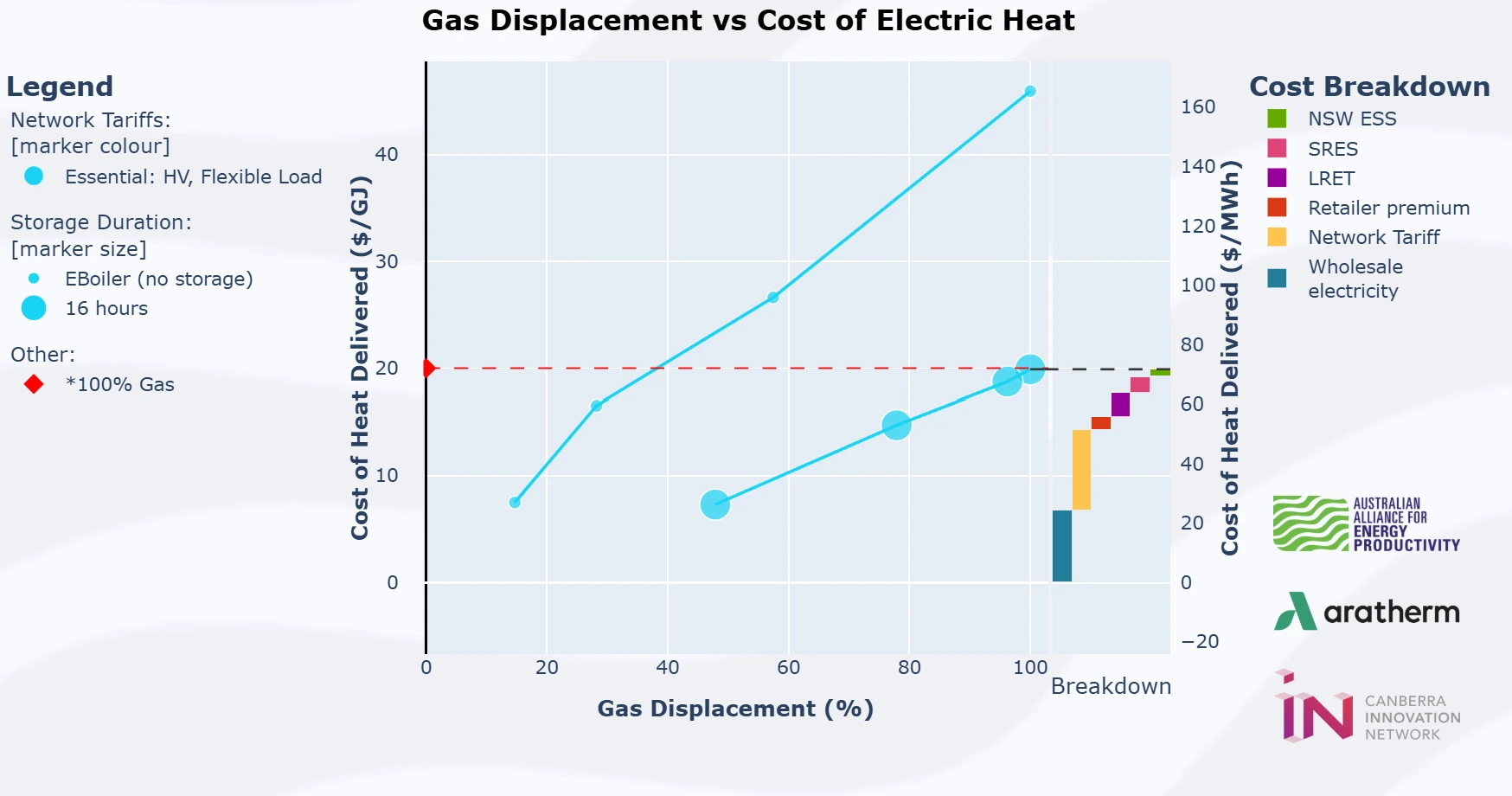
Our friends at Aratherm and the Australian Alliance for Energy Productivity have recently launched a Heat Battery Estimator. This online tool allows Australian manufacturers to explore the benefits of electrifying process heating using thermal energy storage to reduce energy costs and emissions. The tool models a hybrid gas / electric system, allowing you to quickly gauge the trade-off between energy cost and the level of decarbonisation. Higher gas displacement results in a higher cost of electric heat. You can also easily customise the input variables to better reflect your facility including your state, heat load profile, gas price and network tariff. Key takeaways: Adding thermal storage will displace more gas and often lowers the cost of heat. Thermal storage is already cheaper than natural gas for over 75% gas displacement in most states, and in NSW and VIC thermal storage can achieve 100% gas displacement at a lower cost of delivered heat. Electric boilers struggle to be competitive beyond 50% gas displacement, and do not provide a viable pathway to net zero. New trial tariffs offered by leading networks will help to greatly reduce overall energy costs. This estimator is a great starting point, but there may be further upside for your site revealed through site specific analysis. The snapshot above is a sample output from the Heat Battery Estimator. It shows that in NSW for a flat load heat profile, heat batteries achieve price parity with natural gas boilers ($16/GJ, 80% efficiency) under a 100% electric scenario. In comparison, e-boilers can only achieve 35% displacement of natural gas for the equivalent cost of heat delivered. If you want to understand how electric heat batteries stack up for your site, then we can tailor a detailed business case for your specific site requirements.

Read Now
Tools
December 12, 2025

Charge While You Steam: Continuous Power, Minimal Downtime

Industrial operations often depend on steam - and any interruption can mean lost productivity, increased costs, and unnecessary complexity. One of the key capabilities of MGA Thermal’s energy storage system is simultaneous electrical charging and steam discharge - enabling uninterrupted steam supply even while the thermal battery is recharging.This feature is essential when supplying industrial sites with continuous thermal power and minimal downtime from variable renewable energy.Why This MattersDowntime is expensive. Our thermal battery avoids that compromise:No interruption to steam during chargingLower capital and operational costsSupports 24/7 renewable steam deliveryIndependent Control, Smarter OperationAt the heart of this capability is our decoupled subsystem architecture. The charging and discharging functions operate independently, allowing each to be controlled simultaneously and precisely:Charging subsystem: Responds in under 100 milliseconds to fluctuations in electricity pricing and system state-of-charge (measured by the temperature of MGA Blocks). This enables the system to capitalise on the lowest-cost electricity - typically when renewable energy is abundant - without disrupting steam delivery.Discharge subsystem: Regulates steam output based on available stored energy and real-time demand from the client’s facility, ensuring stable and continuous supply.This architecture means the system can charge opportunistically, accessing the lowest cost power and avoiding spikes, while still delivering reliable steam to industrial processes - a critical advantage for facilities that can’t afford interruptions.Proven Performance, Real-World ImpactWe’ve completed testing to demonstrate this capability under industrial operating conditions. Using our first-of-a-kind demonstration unit in Tomago, we showed that the system maintains stable steam delivery while varying charging power in real time.“This isn’t just a technical milestone - it’s a real advantage for our customers,” says Dr. Alex Post, Chief Technology Officer at MGA Thermal.“It means reliable steam without the cost of duplicate backup systems, smart charging when electricity is cheapest, and no compromise on supply. That’s real flexibility proven in industrial conditions.”Let’s talk about how this feature can benefit your site.

Read Now
News/Insights
November 12, 2025

How Electro-Thermal Energy Storage (ETES) Could End Australia’s Energy Dilemma

The need for long term energy storage in Australia is really heating up. Global climate accountability closing in, and the resulting pressure on industries, major emitters and the infrastructure that underpins them is intensifying. The good news is that the race to slash emissions has fuelled Australia’s rapid uptake of renewable energy – the share of renewables in our national electricity mix is at a record high, hitting 77.9% on Sunday 21st September. The Clean Energy Council reported that 2024 delivered a record $9 billion in clean energy commitments, the strongest year since 2018, and created 10,000 new jobs.But with that progress comes a double-edged sword. As we lean more heavily on variable renewable energy sources like wind and solar, we are also becoming increasingly vulnerable to the whims of the weather. Sunlight and wind cannot be dialled up on demand. When skies are overcast or conditions are still, generation drops. For households, that can mean less reliability and higher bills. However, for industry, the ramifications are far more severe – sudden outages may bring production lines to a screeching halt, disrupt supply chains, spoil perishable stock, and wipe millions off the bottom line in a single day. Without reliable large-scale storage solutions, industries are forced to fall back on fossil fuels.The paradox of abundanceThis is the paradox of Australia’s energy transition. Renewable generation is at a record high – on average powering 43% of the main electricity grid, according to the Australian Energy Market Operator (AEMO) – yet we have no viable means of storing it for when we need it.The shift to renewable energy undoubtedly introduces new operational risks. Surplus generation capacity is wasted by curtailment when the grid can’t absorb it, while shortfalls force reliance on carbon-heavy backup sources. These swings threaten the continuity of industrial operations and chip away at the competitiveness of Australian industries. Managing the risks of renewable variability Long-duration energy storage technologies, such as Electro-Thermal Energy Storage (ETES) systems, offer a way to manage the risks associated with renewable volatility. Acting as a shock absorber for the grid, ETES captures surplus renewable energy when generation is high, storing it as high-grade heat until needed. That input energy can be held for hours or even days before being dispatched as clean, reliable energy output.Many ETES systems are designed to complement existing thermal processes, whether industrial steam, heating loops, or even district thermal systems. They avoid costly overhauls and sidestep the red tape and retrofitting delays that can hobble the roll-out of other technologies. Compared to lithium-ion batteries, ETES provides longer-duration storage at lower cost per kWh, making it especially suited to bridging extended lulls in generation. For industry, ETES ensures continuity of operations, allowing factories and processing plants to run predictably even when solar or wind output fluctuates. In this way, ETES transforms the variability of renewable energy into a controllable, dependable resource.Why the time to act is nowMGA Thermal has partnered with Knode to deliver a 180 megawatt-hour industrial heat thermal storage project, demonstrating that ETES is commercially viable and deployable now. Globally, momentum is building, with industry leaders like Shell Ventures investing in thermal storage innovations, recognising that long-duration thermal storage will be a cornerstone of the energy transition.Australia is blessed with some of the best renewable resources on the planet. We have an abundance of wind, sun, and the technical expertise to innovate our way to a cleaner energy future. But without large-scale storage, these assets remain underutilised due to curtailment in times of plenty. ETES offers us the means to capture what nature provides. This isn’t only an environmental issue; it’s an economic imperative. The industries that rely on this energy – from manufacturing to mining – are a cornerstone of our economy. They can’t simply fall away because they lack the tools to decarbonise. The impact on jobs and economic output would be colossal, especially as we've been slow to move on future-facing industries. It’s go-time, just as we’re seeing in other markets.Widening adoption across energy-intensive sectors, combined with embracing ETES as part of our national energy strategy, will stabilise the grid, safeguard industries, protect jobs, and unlock the full economic and environmental potential of Australia’s renewable resources.

Read Now
News/Insights
September 30, 2025
Do not remove. This is required to allow the logo to appear on articles that do not have a main image uploaded.

LDES, Thermal Energy Storage and Alumina Refineries

Thermal Energy Storage Thermal energy storage (TES) systems store energy as heat and are a type of long-duration energy storage (LDES), meaning many of the technologies can store energy for over 10 hours. It’s ideal for storing energy during the day and releasing it at night or even 24x7, plugging the ‘peaks and troughs’ energy dilemma that the electricity grid can struggle with on sunny days or cold nights.There are three types of TES; sensible heat, latent heat and thermochemical. During this case study, we’ll be using a TES technology example, MGA Thermal, which uses latent heat as the dominant storage mechanism. In plain terms, this storage material undergoes a phase change (i.e. melting). MGA Thermal’s latent heat TES is unique as, due to the microstructure of the material, the MGA Blocks store energy through a phase change while remaining outwardly solid. The method reduces containment risks and overall makes the system more economical, having a higher energy density compared to other forms of TES, and a smaller physical footprint than sensible heat LDES technologies which reduces the cost of the balance of plant.Why TES?50% of the world's final energy consumption is used for heating (IEA, 2019). Historically, industrial processes have been consuming the heat provided by burning gas, coal, or oil, often to create steam in boilers. TES can provide decarbonised heat through electrification and storage, thereby replacing the burning of fossil fuels yet allowing industry to continue to operate without disruption.Thermal energy storage can also provide both heat and electricity supply from stored renewable energy. This is called cogeneration and creates flexibility for industry to use heat energy for their manufacturing processes, and electricity for their business operations. LDES typically stores renewable energy at times of excess supply. In addition, our example TES from MGA Thermal, decouples the charge and discharge in its design, that is it can charge and discharge simultaneously. As an example, this means the system could charge for 8 hours a day whilst discharging 24/7, thus powering industries that need to operate around the clock. The LDES Council report ‘Driving to Net Zero Industry Through Long Duration Energy Storage’ found that in many applications, LDES can already electrify low-to-medium temperature processes at a more economical cost than alternatives. Read more about LDES as applied to industrial decarbonisation here. Industrial heat Industry has many considerations when looking to replace typical gas or coal-fired steam systems. Successfully decarbonising will require new scaling technologies that firm renewables and service a broad range of temperatures. Most processes currently use fossil fuels, and decarbonisation will require clean steam or process heat in temperatures ranging from less than 150°C to over 1000°C. The LDES Council suggests that existing LDES technologies can already address 65% of industrial emissions and provide a clear pathway to effective decarbonisation.TES in an Alumina Refinery What does an Alumina Refinery do?Alumina or aluminium oxide, is a material manufactured partway through the aluminium refinement process. Mined bauxite ore is refined to alumina, which is then processed to produce aluminium. The refining process used by alumina refineries (Bayer) involves digestion, clarification; precipitation and calcination. During this process, a large amount of process heat in the form of high-pressure steam is required at the digestion step and very high-temperature process heat is required at the calcination step. The LDES Council report ‘Net-zero Heat’ uses a business case study with the below specifications. Technical specificationsBaseload operation (>99% uptime), with daily TES charging cyclesSteam at ~104 barg and 325C (260GWh annual equivalent)380MW electric boiler with 6.6 GWh TES replacing 380MW gas boiler Upgrade 300km transmission line built to support additional 980MW grid capacity~600,000tCO2 emissions saved annually Source: LDES Council, Net-zero Heat p.43, 2022In this example from the LDES Council, a 6.6GWh Thermal Energy Storage System and a 380MW electric boiler replace a 380MW gas boiler, to provide heat for the digestion step. MGA Thermal TES is ideally positioned to deliver the process steam in the alumina refinery. The MGA solution combines the electric boiler and storage functions into a single system. It is considered a highly flexible operation with daily charging cycles and the ability for co-generation with 24/7 discharge. Key factors that contribute to ultimate costs and profitability are fossil fuel cost vs renewable electricity cost and CO2 price (or carbon tax). The LDES Council report found that the return on investment is even stronger when the business has access to behind-the-meter solar electricity. Benefits of TES in Alumina Refineries Flexibility: TES allows flexible charging. TES systems can charge at times of low grid demand and store the energy to use at any time of the day. This flexibility helps to level out the load on the grid and may unlock additional grid service value streams. Some grid networks may begin reducing fees for electricity transmission (grid demand fees) and offer remuneration for flexibility – accepting TES as a grid asset because it doesn’t add to the load during times of stress. Co-generation: Combined heat and power TES technologies that are capable of making very high-temperature steam like MGA Thermal can also drive steam turbines prior to providing the heat energy for alumina digestion. Generating both heat and power with the one storage technology improves flexibility whilst helping to reduce cost, complexity and resources used. Variable pricing: Many grids around the world have variable spot prices. This unlocks the refinery's ability to capitalise on variable electricity pricing - buying while the price is low or even negative. It also avoids any increases in the price of fossil fuels as climate change increases global tensions. Reducing CO2: reducing emissions and decarbonising the refinery will decrease carbon taxes, depending on the country and region’s policies. Carbon taxes are set to become increasingly common as emission reduction targets grow closer- read LDES, Industrial Heat and Decarbonisation Policy. Most importantly, reducing CO2 emissions enables refineries to meet Net Zero obligations and help curb the effects of climate change. Our technology, MGA Thermal, is ideal to decarbonise Alumina refineries, ready to address industrial heat, steam or steam + power applications between 150°C and 600°C. If you’d like a techno-economic assessment of how TES could work in your industry, submit your project details here.

Read Now
News/Insights
March 12, 2024
Do not remove. This is required to allow the logo to appear on articles that do not have a main image uploaded.

Why Long Duration Energy Storage is the Solution to Industrial Decarbonisation

Why does industry need decarbonising?Industrial emissions currently contribute to over 25% of the world's greenhouse gas emissions, generating over 12.5 billion tons of CO2 emissions in 2021 (LDES Council 2023)!This is only expected to increase as the global industrial heat demand is predicted to grow by 34% from 2019 to 2040 (IEA New Policies Scenario 2017). Decarbonising industry is critical to realizing the Paris Climate Accord 1.5°C pathway, and keeping the dramatic effects of climate change at bay.Industry has many considerations when looking to replace typical gas or coal-fired steam systems. Successfully decarbonizing will require new and scaling technologies that firm renewables and service a broad range of temperatures. Most processes currently use fossil fuels and in order to decarbonise will require clean steam in temperatures ranging from less than 150°C to over 1000°C. One solution is Long-Duration Energy Storage (LDES), which can already address 65% of industrial emissions and provides a clear pathway to effective decarbonisation.The LDES Council recently released their report ‘Driving to Net Zero Industry Through Long Duration Energy Storage’ discussing the impact of decarbonising industry. This report states that the emissions reduction opportunity is approximately 8 billion tons of CO2 emissions, which is nearly 2/3 of global industrial emissions. MGA Thermal highly recommends the report and other LDES Council resources, read the report here.Types of industrial heatThere are four different temperature ranges that are typical for industrial heat. Below 150°C – this includes processes such as food & beverage, wood processing, data centres etc. There are existing solutions (E.g. heat pumps) to decarbonise this temperature range on the market.Between 150°C and 500°C – The LDES Council classifies this segment as “easy-to-electrify” and this segment includes processes that typically use heat in the form of steam or hot air.Between 500°C and 1,000°C – Some of this segment can be addressed with current LDES technology, and emerging LDES technologies will further decarbonise this segment. Greater than 1,000°C – The LDES Council classifies this segment as "hard-to-electrify", meaning they cannot readily be electrified due to high-temperature balance of plant requirements.The below figure from the LDES Council outlines the different heat requirements for each industry, with some industries like chemicals, cement, steel and metal using heat in all four segments. Approximately half of the global industrial heat production falls within the easy-to-electrify segment, including processes such as chemical production, paper, rubber and plastics. The remaining half is in higher-temperature sectors of the hard-to-electrify segment such as steel and cement.Why LDES?LDES can provide both heat and electricity supply from stored renewable energy. It decarbonises the current process of fossil fuels and boilers, allowing industry to continue to operate without disruption. LDES stores renewable energy from excess supply from renewable sources, and firms it so it is available 24/7. This results in LDES being an economically attractive solution for industrial firms seeking to decarbonise heat and/or improve the reliability of their electricity supply. The LDES Council report ‘Driving to Net Zero Industry Through Long Duration Energy Storage’ found that in many applications, LDES can electrify low-to-medium temperature processes at a more economical cost to the alternatives. LDES technology is already on the market to provide the firmed steam or heat for industry.The economic case for LDES in industryLDES is an economically attractive solution for industrial firms, especially when factors such as price volatility, energy reliability, and carbon taxes are taken into account. The LDES Council found in low-to-medium temperatures, the economics of the LDES solution are contingent on electricity costs if planning to draw from the energy grid. Therefore the economic case improves further for grid systems that have volatile electricity prices from natural gas prices (Germany), intermittent renewable supply such as solar production (Australia) or low reliability of supply from unplanned outages or labour strikes (South Africa). “LDES improves electrification economics by decreasing the cost of abatement by 10% to 20% compared to a scenario where LDES is not utilized. Project economics are most sensitive to four key variables: lost load cost savings (related to outage count and duration); natural gas prices; carbon taxes; and bill savings (tied to grid volatility). Increasing any of these variables would enhance LDES feasibility in the future, reducing cost of abatement by ~10-65%.”The economic savings of switching to LDES is predicted to advance further towards 2040. Key factors increasing the incentive for reliable steam or heat production from LDES solutions include falling capital costs of LDES solutions, diminishing grid reliability and increased price volatility. Thermal Long-Duration Energy StorageThermal Energy Storage (TES) is an ideal technology to deliver heat or even heat and power (co-generation) to industry. There are various types of TES technologies, that can be categorised by different types such as latent heat (includes a phase-change i.e. melting), sensible heat (remains in the same phase), or thermochemical (reversible chemical reactions that produce/use heat). MGA Thermal stores energy as latent heat, meaning the storage material goes through a phase change. However, what makes MGA’s technology unique, is that the MGA Blocks remain outwardly solid throughout the phase-change. The MGA Blocks are designed with two key materials. Tiny metal alloy particles are dispersed through a matrix material. The metal alloy particles melt as the blocks are heated and energy is absorbed, while the matrix material remains solid and keeps the molten particles in place. As well as the sensible heat that MGA blocks store, vast amounts of thermal energy is stored in the solid-to-liquid phase change as latent heat and is released as the blocks cool and the particles become solid again. MGA Blocks are used in Thermal Energy Storage Systems (TESS) which deliver continuous high-temperature heat or electricity that is safe, low cost, sustainable and high capacity.MGA Thermal is a scaling LDES technology ready to address industrial heat applications between 150°C and 650°C. Contact us to find out how we can enable 24/7 heat or steam production for your industrial application and make 24/7 renewables a reality.

Read Now
News/Insights
December 13, 2023
Do not remove. This is required to allow the logo to appear on articles that do not have a main image uploaded.

MGA Thermal turbocharges Western Australia’s green energy transition

MGA Thermal and knode join forces creating a clear and actionable clean energy roadmap for Australia’s largest stateWe are pleased to announce our partnership with Western Australian based energy company, knode, to create a clear and actionable pathway to enable the state to become a leader in green energy.Home to a vast expanse of natural assets and a world-class industrial ecosystem, Western Australia is a global energy hub. Heat energy in industry is responsible for more than 50% of the world’s energy use. It is an essential component of manufacturing, including refining raw materials, smelting metals and producing chemicals.Western Australia’s government has committed to closing its state’s last coal-fired power plant by 2029 as we race towards net-zero. Yet, new data released by the Clean Energy Regulator reveals that of all the renewable energy capacity deemed either ‘committed’ or ‘probable’, only 5% was in Western Australia.“Western Australia has the opportunity to be one of the world’s clean energy leaders and pioneer the nation’s decarbonisation. But, what’s needed is the green energy infrastructure to either use clean steam in industry or continuously power the electricity grid — ultimately making 24/7 renewable energy a reality,” says Mark Croudace, Deputy CEO and CCO at MGA Thermal.As a part of a group of companies that is leading decarbonisation in heavy industry, knode is acutely aware of the opportunities for the state’s natural resources industry to create a closed loop for green energy utilising MGA Thermal.“Partnering with knode will be the connecting fibre between MGA Thermal and future customers, helping us to scale impact and ultimately tackle the energy crisis that exists in harder-to-abate industries. MGA Thermal can store huge amounts of renewable energy to enable the actualisation of net-zero targets and achieve 24/7 renewable energy. We’re thrilled to have a local Western Australian partner on the ground to take local organisations on the journey to decarbonisation,” adds Croudace.“MGA Thermal’s unique technology has enormous potential to support the uptake of clean energy in both Western Australia and across the globe. The energy transition for our state’s heavy industry to clean energy is a huge challenge and one that requires us to rethink the way we capture and store energy. The adoption of MGA Thermal’s storage technology will be vital in plugging this gap — enabling reliable, long-term energy storage across solar, wind, hydrogen and retrofitted thermal power plants,” explains Chris Nelson, CEO of knode.About knodeknode is an energy company focussed on driving decarbonisation in heavy industry. knode and MGA Thermal are working together to provide storage solutions and process engineering to deliver green outcomes, securing the future of the heavy industries we all rely on.

Read Now
Partnerships
April 27, 2023

The Duck Curve, synchronous generators and renewable energy

Installed rooftop solar will soon generate more power than Australia’s remaining coal plants, that’s over 20GW of combined grid-connected capacity! There’s clearly a lot of rooftop solar, but how does it affect the whole grid system? This blog discusses how the demand curve has changed over the last 10 years and the change in energy generation curves between generation technologies. The Duck Curve A rather well-known image of the electricity demand curve is referred to as “the duck curve”. It originates from the California Independent System Operator (CAISO) (essentially the AEMO of California) which published the below chart in 2013, displaying energy demand on a spring day. The chart also showed CASIO’s prediction of how the demand curve would change in the coming years. Source: http://www.caiso.com/The overnight demand in megawatts remains relatively stable over the 7-year projection; except for a slight increase, likely due to increasing population and rising connections to the main electricity grid. From about 8 am the demand curve begins to fall, dipping around midday and early afternoon; the curve falls deeper as the years progress. The drop in demand is due to an increase in small-scale solar generation (ie. rooftop solar) throughout the day and greater adoption over the years. Rooftop solar allows households to use their own generated power during the day and therefore fewer households are relying on energy from the main grid. However, they can only produce their own electricity during the day and still rely on the grid when the sun isn’t shining. Demand for electricity from the main grid then increases as the sun sets and more people return home from work, causing an evening peak in demand at around 6 pm.Generators have to cope with steep ramp-ups and ramp-downs to accurately meet the electricity demand, which is commonly the case in the evening peak. It is challenging for grid generators and operators to balance because it means a huge amount of generation capacity coming online very rapidly. Many elements of the grid infrastructure were designed for traditional synchronous generators and a smooth demand curve. The extreme demand curve is not only taxing on infrastructure, but it also becomes uneconomical for traditional synchronous generators. If they can’t ramp up quickly to meet this demand, they need to generate all day, regardless of whether they can sell the electricity during the day. This leads to things like over-supply and negative electricity pricing.Of course, demand doesn’t always look like the predicted graph – it changes day to day, and because of the renewable behind-the-meter generation, even depends on the weather. That said, it does usually follow the two demand peaks: a small one in the morning and a big one in the evening. Supply Curves So, if the demand curve looks like a duck, what does the supply curve look like? Well, it’s different for every form of energy generation, and that’s why the transition to a 100% renewable energy grid is not simple. The NEM has over 100 different generation companies, including synchronous thermal power stations and renewable energy. Different types of generators have different generation supply curves, of varying intermittency and flexibility. Variation may even occur within one type of generator; solar PV farms across the grid will vary in generation depending on climate, weather, maintenance, and more. Below we discuss the typical generation curve of synchronous generators, solar, and wind power. Synchronous generators Generators such as thermal power stations have a fairly smooth generation curve. You can view live power generation at OpenNEM- Often, through OpenNEM, you can observe coal power generators slightly increase generation of the morning peak and then more significantly ramp up for the evening peak. Synchronous generators were designed to run continuously and at a constant frequency, and hence their infrastructure and design do not allow quick ramp-up/down or shut down/start up (this is discussed in ‘Inertia, Synchronous Generators and Frequency’). Solar generation Typically, Solar PV generation begins as the sun rises and finishes as it sets. This creates a curve that generally looks like an upside-down u. Concentrated Solar Power has a similar curve, although it works through direct radiation, so the shape is closer to an upside-down v. Solar power generation can be fairly accurately predicted, through weather forecasts. There are also technologies that accurately predict when a cloud will be over the solar field and adjust for the drop in electricity generation.Wind generationThe wind generation graph is an example of wind generation over a day. Wind power is less predictable than solar generation however we can predict broad trends according to weather events, seasons and years. Although the power generation is intermittent it still managed to be a 12.5% contribution to the NEM in the last year (OpenNEM, 1 year from 16/01/2023). Fortunately, solar and wind generation are independent and tend to combine well to provide a fairly continuous supply.By overlaying demand with solar and wind generation, the peaks and troughs of mismatched energy generation and demand become evident. Supply often outweighs demand in the middle of the day, and demand often peaks in the evening just as solar generation drops off. We will discuss the typical results of an oversupply in a future article. AEMO is the body that ensures the energy generation supply meets electricity demand, and as the example data shows, the energy mix to meet demand changes every day depending on renewable energy generation. To see real-time energy mix in consumption and generation visit OpenNEM. The energy mix will continue to change as new technologies emerge and existing ones become cheaper and more efficient. Currently, solar energy curtailment is a common practice to balance the energy mix and retain grid integrity. This basically means ‘switching off’ solar farms in the middle of the day to minimise over-supply. However, increasing the amount of energy storage on the NEM would allow intermittent renewable energy generators to produce in excess of energy spot demand and store it for evening peak consumption. Read about MGA Thermal’s energy storage solution here. Published 03/03/2023 – MGA Thermal. Authored by Arden Jarrett.A version of this blog was originally published on 18 May 2021.

Read Now
News/Insights
March 3, 2023

Shell Backs MGA Thermal Demonstration Plant

MGA Thermal is thrilled to announce we have been awarded funding by global energy provider Shell. The funding, approximately US$400K (AUD$560K), provided under Shell GameChanger, is to accelerate the MGA Thermal Energy Storage demonstration unit. Located at MGA Thermal’s new commercial manufacturing facility in Newcastle, Australia, the demonstration unit aims to gather valuable data amid the growing and urgent need for new longer-duration energy storage (LDES) solutions to replace ageing or increasingly expensive thermal and other conventional power stations.The MGA Thermal Energy Storage demonstration plant will demonstrate the firmed steam generation from stored intermittent renewable energy and has an expected total budget of approximately AUD$3 million. It will be located at the company’s head office in Tomago, NSW, and has a planned storage capacity of 5 MWh, with charging and discharging at up to 500 kW for 10 hours. The MGA Thermal Energy Storage unit is approximately 12m long and 3m wide, will produce valuable performance data and provide a tangible demonstration of the technology for prospective industrial and power customers. Data gathered will cover the charging and discharging behaviour, fluid dynamics and temperature distributions, and validate the efficacy of mid-to-long-term thermal storage in a practical system.“MGA Thermal was selected from a pool of dozens of quality applicants to a long-duration energy storage call for solutions,” said Matt McDonald, from Shell GameChanger. “I am excited that Shell can support MGA Thermal’s pilot project and their ambitions to enable the storage of renewable energy. We look forward to seeing their progress and to continue lending Shell support and expertise.”Mark Croudace, CCO of MGA Thermal said, “We are very pleased to have Shell’s recognition and support for the MGA Thermal technology and pilot. Our technology is attractive for those looking to decarbonise, with a high potential impact in the medium to long-duration energy storage sector. Shell’s funding, in conjunction with ARENA, allows us to accelerate our pilot, going live in 2023, gather additional data about our technology, and continue our rapid growth into commercial industrial and power markets.”‍

Read Now
Investment/Grants
February 20, 2023

Inertia, Synchronous Generators and Frequency

What is inertia and how does it support the grid? Our electricity network was historically created for baseload power through thermal fossil fuel power plants and therefore works best with the conditions provided by those generators. That is constant output power, frequency, and signal inertia. More recently, the energy generation mix has been diversifying with the rapid uptake of renewable power generation and it brings with it a decreased level of inertia in the grid. Read on to learn more about inertia…Synchronous generators: what are the moving parts? Generating electricity from fossil fuels involves burning non-renewable fuel sources to produce heat. The heat is transferred to a gas, that is, steam in steam turbines and air in gas turbines. The high-pressure, high-temperature gas is used to spin a turbine, which in turn spins an alternator. It is the alternator that actually generates the AC electricity[i]. The term ‘synchronous generator’ comes from the fact that the speed that this generator spins (in revolutions per second) is synchronised with the frequency of the grid (which is necessary to maintain the appropriate AC signal).What is Inertia?Inertia in physics is defined by Newton’s first law of motion, also known as the law of inertia: a body at rest remains at rest, or, if in motion, remains in motion at a constant velocity unless acted on by a net external force[ii]. Inertia, in the case of the electricity grid, is referring to the grid’s ability to ‘push back’ against any disturbances. The spinning turbine of synchronous generators (fossil-fuel fired power stations) provides constant grid inertia; the spinning turbine cannot stop quickly and only very slowly runs down if the pressurised gas slows or stops. Basically, it’s a big heavy piece of machinery that wants to keep spinning at the same speed.What does low inertia result in? A grid that is more susceptible to minor disturbances disrupting the whole system. Another way to think of inertia is as a ‘buffer’. If a disturbance occurs, the turbine will keep spinning and allow some leeway which prevents the minor disturbance from affecting the whole grid. Watt energy has an explanation about FACS here.How is this related to frequency?The frequency in the grid was set historically as the speed of the turbine and alternator of synchronous generators. You can see that the spinning inertia of a synchronous generator will keep the generated power at a consistent frequency. Globally, the frequency in each country is either set at 50 Hz or 60 Hz; the grid in Australia is kept at a constant frequency of 50 Hz, whereas the grid in the USA is set at 60 Hz.What happens when the frequency drops? Grid infrastructure is designed for a certain frequency and MW capacity, if an event occurs that exceeds the designed limits, the system shuts down to protect that infrastructure usually resulting in blackouts – read about the infamous 2016 South Australian Blackout[iii]. However, the Australia Energy Market Operator (AEMO) has processes in place to avoid total system failure; one of these is quick response energy storage. Asynchronous generators Many renewable power generators which are becoming very common on our grid are asynchronous. Wind turbines use rotation to generate electricity, the turbines spin at variable speeds set by the wind and not from constant high-pressure gas which limits the amount of inertia they hold. Solar photovoltaic (PV) cells only produce DC electricity when the sun is shining and have no moving turbines; solar PV has no spinning parts which would contribute to inertia. Both wind and solar are known as intermittent energy sources and have electronic frequency control to match the grid-required 50 Hz.Energy storage & durationTo make up for the decreasing level of built-in inertia on the grid, other buffer systems have been installed – such as batteries. Quick response energy storage can be used to meet frequency variations, stabilise the grid and become that ‘buffer’ or ‘cushion’ to external events. Quick response energy storage is vital for the NEM’s shift to renewable power. However, a full combination of energy storage is needed to meet daily, weekly and seasonal demand while managing intermittent supply generation. Medium and Long Duration Energy storage is also a rapidly expanding market. It refers to the effective length of storage, creating categories within the energy storage market. While batteries are very effective at quick response to electricity output, there are many other forms of energy storage that range from hours to months. Some medium-duration energy storage technologies such as Thermal Energy Storage (TES) can build in a level of inertia to the grid. As we transition to a net-zero energy network, a combination of energy storage technologies is a promising solution to create a stable, and robust grid.MGA Thermal’s technology is medium to long-duration energy storage which is ideal for shifting the supply curve to meet demand on a daily to weekly basis. The TES can repurpose existing thermal power station infrastructure, to create cost-effective, sustainable, robust grid-scale energy storage. Learn more about the MGA Thermal technology here. Published on 10/02/2023 - Arden JarrettA version of this blog was originally published on 18 January 2021.

Read Now
News/Insights
February 10, 2023

AGL feasibility study repurposing a power station

MGA Thermal is pleased to share that Australian electricity giant, AGL Energy Limited (AGL), who operate Australia’s largest electricity generation portfolio, is progressing with a feasibility study of MGA technology to be applied to the 200 MW Torrens Island B power station in South Australia, supported by the Australian Renewable Energy Agency. AGL will be assessing the feasibility of repurposing existing electricity infrastructure at sites like Torrens Island, to be powered by renewable sources and backed by flexible energy storage technologies. The $1 million feasibility study will investigate options to use grid electricity to charge the thermal energy storage and discharge through one of the power station’s existing 200 MW steam turbines, which ordinarily runs on gas, when electricity is required on the grid.AGL’s feasibility study will be conducted over approximately 12 months, with MGA Thermal and one other shortlisted technology, with a view to establish the technical and commercial feasibility of the chosen preferred solution.The Australian Energy Market Operator in its 2022 Integrated System Plan indicated the National Electricity Market (NEM) will need more than 60 GW of dispatchable generation and storage by 2050 to support the uptake of renewable energy.The most pressing utility-scale need in the next decade is for medium-duration (4 to 12 hours) storage to manage daily variations in solar and wind output to meet customer demand as coal power stations are shut down.Findings from the feasibility study are expected to be replicable and scalable with other thermal generators across the NEM, with technology providers being able to benefit from the information.ARENA CEO Darren Miller said the study will explore the role thermal energy storage can take in allowing higher levels of renewable energy production across the NEM by repurposing existing power stations and energy infrastructure.“AGL’s study comes at an important time when we need to look at all options for renewable energy storage. As thermal power stations close, there could be an opportunity to retrofit these sites as we head towards net zero emissions,” Mr Miller said.Read the full ARENA announcement here.

Read Now
Research/Studies
November 7, 2022

ARENA backing for MGA Thermal supercharges renewable energy storage

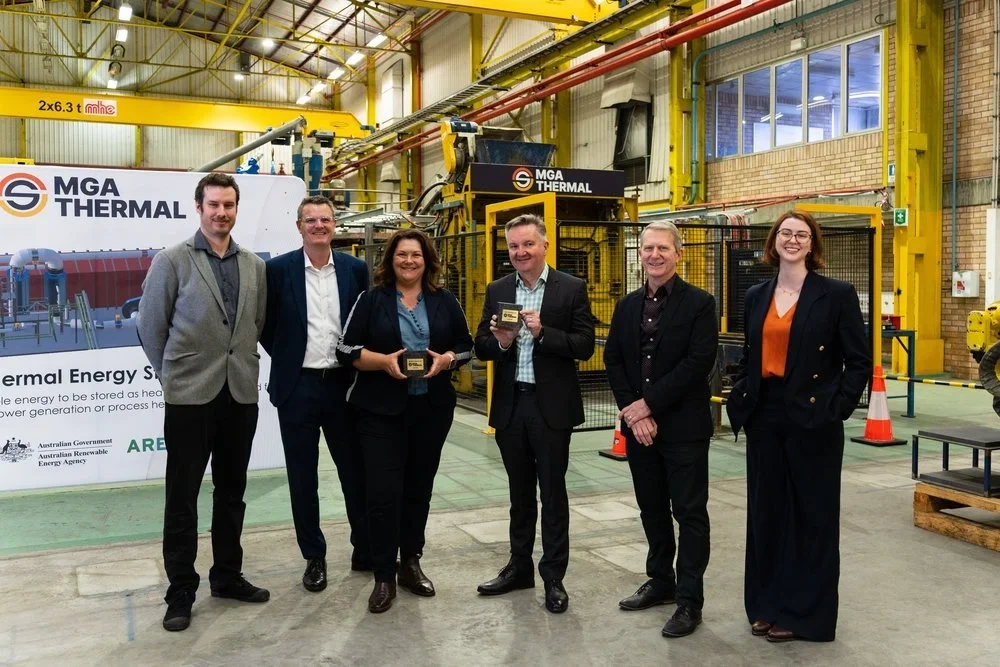
We are thrilled to share we have been awarded funding of $1.27 million from the Federal Government’s Australian Renewable Energy Agency (ARENA) to launch our MGA Thermal Energy Storage demonstration unit.It was announced on 10 August 2022 by the Hon Chris Bowen MP, Australian Federal Energy Minister and Ms Meryl Swanson MP, Member for Paterson, at our Head Office and Manufacturing site in Tomago, NSW. The $1.27 million funding will help launch the creation and installation of a 5 MegaWatt hour (MWh) storage prototype to demonstrate the generation of steam from stored thermal energy. Showcasing charging and discharging at up to 500 KiloWatts (kW), the demonstration unit will be located at the company’s facility in Tomago. With an expected budget of $2.85 million, the pilot unit will produce valuable performance data and provide a tangible demonstration of the technology for prospective customers. “The latest round of funding underscores the critical role that MGA Thermal blocks will play in the nation’s energy transition. Solutions like ours make it possible to retrofit existing thermal power plants with renewable storage technology” says Erich Kisi, co-founder and CEO of MGA Thermal. “If the current industry sentiment and the impacts of climate change are telling us anything, it’s that we can no longer hold off on the renewable energy transition. While conventional storage technologies like batteries play an important role, a complementary, grid-scale dispatchable energy solution is required to power a seamless transition to renewables nationally,” adds Kisi.Darren Miller, CEO of ARENA explains, “MGA Thermal’s unique technology has enormous potential to support the uptake of renewable energy. The novel approach could make a real difference in the mid-to-long-term storage category, supporting hydrogen and pumped hydro. With potential developments for industrial heating and uses, MGA thermal will play a crucial role in decarbonising the electricity grid and heavy industry.”With current customer interest of 20 GWh, the equivalent of powering 1.3 million homes, MGA Thermal’s solution can repurpose coal-fired and power plants with thermal storage to deliver clean baseload power, while also helping to prevent job loss from power plant closures.

Read Now
Investment/Grants
August 10, 2022
Do not remove. This is required to allow the logo to appear on articles that do not have a main image uploaded.

MGA Thermal MMI collaboration with TOSHIBA

A collaboration between Toshiba, MGA Thermal and Graphite Energy has been awarded a Modern Manufacturing Initiative (MMI) grant for $9.8 million towards a $19.6 million project to accelerate economical green hydrogen production.The collaboration will combine advanced electrolysis and thermal energy storage for the production of super low-cost hydrogen fuel in NSW. The TOSHIBA Solid Oxide Electrolysis Cell is a high-efficiency, advanced method of electrolysis which, when integrated with MGA Thermal and Graphite Energy storage will allow for high-capacity continuous (24/7) production of hydrogen from renewable energy.Erich Kisi, CEO of MGA Thermal said, “We are very excited to announce this new application of MGA Thermal technology, which will be a key driver of the production of economical Hydrogen.”The Modern Manufacturing Initiative (MMI) is a $1.3 billion federal government initiative in key manufacturing priority areas. It aims to transform manufacturing businesses and help them scale-up, translate ideas into commercial successes and integrate into local and international value chains. The MMI Collaboration Stream provides funding to support very large projects in business-to-business and business-to-research collaboration, to build economies of scale. Toshiba Energy Systems & Solutions Corporation are a leading supplier of integrated energy solutions and Global Original Equipment Manufacturer based in Japan. Toshiba are contributing to achieving carbon neutral sustainability goals through their long experience and expertise in a wide range of power generating and transmitting systems and energy management technology. Graphite Energy is an Australian based leader in the integration of graphite based Thermal Energy Storage for process heat, renewable energy storage and green fuels.With MGA’s novel thermal energy storage material, this makes an ideal consortium to produce green hydrogen more efficiently and cheaply than ever before.

Read Now
Investment/Grants
June 28, 2022

20GWh of Global Storage Interest

We are thrilled to announce we reached a milestone with customer interest for 20 GigaWatt hours (GWh) of energy storage, the equivalent of powering 1.3 million homes, from customers for its breakthrough technology.The milestone is being celebrated by unveiling the first stage of our new commercial manufacturing facility in Newcastle, Australia to meet that demand amid growing and urgent need for new energy storage to replace aging or increasingly expensive thermal and other conventional power stations. The new equipment is in the processed of being commissioned and will be capable of manufacturing more than 1,000 blocks, or 1MWh of energy storage, per day by the end of 2022.The initial run of blocks will be used to kick off our partnership with the Toshiba International Corporation and Graphite Energy to produce low-cost green hydrogen thanks to a $9.8 million grant from the Australian Government’s Modern Manufacturing Initiative.“If current market sentiment and the impacts of climate change are telling us anything, it’s that we can no longer hold off on the renewable energy transition. While conventional storage technologies like batteries are no doubt important to that mission, we believe our MGA Thermal Blocks will be a major part of that transition, to retrofit existing thermal power plants and support development of low-cost renewable energy storage and green hydrogen,” said Erich Kisi, co-founder and CEO of MGA Thermal. “Utilities around the world have told us they need this type of technology to make that move, and we are well on our way to building the capacity to meet that demand.”MGA Thermal is working closely with global organisations like Toshiba International Corporation to demonstrate its potential for a wide variety of use cases like generation of low-cost green hydrogen.QUOTE FROM TOSHIBAToshiba International Corporation is very excited to be collaborating with MGA Thermal to develop innovative solutions that move our society towards a sustainable and carbon neutral future. Our partnership with MGA aims to deliver long term energy storage, low-cost Hydrogen production and renewable electricity generation, all highly valued features of a successful future energy market.The coupling of the MGA thermal storage technology with the Toshiba’s Solid Oxide Electrolysis Hydrogen technology will allow both parties to work with government and industry to develop a joint engineering and manufacturing strategy so that high value engineering, manufacturing and supply chain jobs are created locally with the value generated exported globally in the future.

Read Now
Technology
June 28, 2022
Do not remove. This is required to allow the logo to appear on articles that do not have a main image uploaded.

MGA Thermal joins LDES Council

MGA Thermal is pleased to announce we have become a member of the Long Duration Energy Storage Council (LDES Council), a global executive-led organisation focused on replacing the use of fossil fuels to meet energy demand with zero-carbon long duration energy storage. MGA Thermal is joining the LDES Council alongside five other new members, which represent a mix of LDES technologies targeting decarbonization of both power and heat, continue to build momentum for the LDES Council in developing a membership with diverse perspectives and a broad range of expertise. The LDES Council now has over 50 diverse companies in regions across the world representing the full energy value chain – including technology innovators, equipment providers, renewable energy companies, utilities, investors and end-users. The Executive Director of the LDES Council, Julia Souder said, “Our growing membership is an indication that the Council’s work is moving forward and more important than ever to our goal of a decarbonised world with long duration energy storage at the epicentre. As we look at a system wide approach where LDES provides both heat and power flexibility, the broad perspective of our global experts support the acceleration and rapid deployment of long duration energy storage.” MGA Thermal’s CTO, Founder and LDES Council representative, Alexander Post says “Thermal energy storage is emerging as a key technology in the mix required to achieve stable and reliable power supply from intermittent renewable sources, particularly in applications where storage is required over medium to long durations (days to weeks rather than minutes to hours). The Long Duration Energy Storage Council serves the vital role of benchmarking the various technologies on offer and informing the public. MGA Thermal is thrilled to join the council and look forward to helping support the ecosystem.” Read the LDES Council’s release in full.About the LDES Council The LDES Council is a global, executive-led non-profit membership organisation, comprising technology providers, equipment providers, renewable energy companies, utilities, grid operators, investors and end-consumers. It strives to accelerate decarbonisation of the energy system at lowest cost to society by driving innovation, commercialisation and deployment of long duration energy storage. The LDES Council provides fact-based guidance and information to governments, industry and broader society, drawing from the experience of its members which include leading energy companies, technology providers, investors and end-users. The Council recently launched two research reports. One on 24/7 Clean Power Purchase Agreements (PPAs) and one on regulatory and policy options. To learn more: www.ldescouncil.com.

Read Now
Memberships
June 24, 2022
Do not remove. This is required to allow the logo to appear on articles that do not have a main image uploaded.

Collaboration with Peregrine Technologies

MGA Thermal is pleased to announce our collaboration with United States based Peregrine Turbine Technologies (PTT). Last week, PTT provided a ‘breakthrough energy and storage update’ where they announced the collaboration with MGA Thermal to field a commercial-grade, long duration, thermal energy storage (TES) pilot plant. Peregrine Turbine Technologies (PTT) was founded in 2012 and is based in Maine, USA. Much like MGA Thermal, PTT has researched and developed their own ground-breaking technology. PTT has developed the world’s first High-Performance sCO2 Turbine Engine. The advanced turbine is a heat engine that can operate from high-quality heat sources or air-combustible fuel, including NG, biomass, small modular nuclear and concentrated solar. The collaboration between MGA Thermal and PTT targets the development of a distributed energy storage & electricity generation system capable of accepting renewably generated electricity and re-dispatching it on demand.Erich Kisi, MGA Thermal CEO said, “We are very excited to be working with PTT on this initiative. The system will be a game-changer for solar and wind energy generators wanting to control their power dispatch”As individual leaders in our field, we are excited to continue our collaboration with Peregrine Turbine Technologies, advancing the capabilities of distributed grids, storage and generation systems globally. Read Peregrine Turbine Technologies News Release on the collaboration here.

Read Now
Partnerships
August 5, 2021

MGA Thermal raises AUD$8m

MGA Thermal is extremely pleased to announce that we have raised AUD$8 million (USD$5.8 million) to expand our manufacturing capacity and export MGA thermal energy storage globally.The funding was led by Main Sequence, Australia’s deep tech investment fund founded by CSIRO, with participation from new investors Alberts Impact Capital, New Zealand’s Climate Venture Capital Fund, The Melt and a select group of leading angel investors including Chris Sang, Emlyn Scott and Glenn Butcher. Previous round seed investor CP Ventures also added to their existing holding.The new capital allows us to rapidly scale our team and manufacturing capacity to meet international demand for thermal energy storage technology. We are working with partners to deploy the technology in Australia, Europe and North America and plan to double the team in the next 12 months to scale towards making hundreds of thousands of MGA blocks per month.“Our mission is to help accelerate the shift to renewable energy by providing a new way to store energy that’s clean, economical, and scalable. We are gratified by our investors’ recognition of our achievements and their confidence in our ability to execute on this exciting new phase of growth,” said Erich Kisi, CEO of MGA Thermal.“We believe that thermal storage will play an important role in the energy transition and are overwhelmed with international and domestic interest to date. The potential opportunities and use cases for our technology are extensive. Whether it’s retrofitting our thermal power stations, providing power to remote communities, supplying heat to industry, heating houses and commercial spaces, or heating for electric vehicles, this can all be powered using renewable energy stored in our MGA blocks.”We look forward to continuing to revolutionise the world’s renewable energy storage systems with the support of our new investors.

Read Now
Investment/Grants
August 3, 2021
Do not remove. This is required to allow the logo to appear on articles that do not have a main image uploaded.

EnergyLab Scaleup 2020

MGA Thermal is proud to share that we have been selected to participate in the EnergyLab 2020 Scaleup Program cohort.The EnergyLab Scaleup Program has been created specifically to help accelerate high-impact clean energy startups in Australia and overseas. The program has already begun facilitating collaboration between fast-growing cleantech companies, energy utilities and other partner organisations. Key energy stakeholders which back the program include the Australian Renewable Energy Agency (ARENA), APA, Westpac, Powerlink, CS Energy, FRV, Counties Power, Nectr, Yurika and the International Microgrid Association.The program officially launched last Friday, when each of the thirteen participating companies began a curated five-month journey to accelerate their growth through mentoring, access to advisors and facilitated collaboration and investment opportunities. EnergyLab identifies boosting each of the companies’ commercialisation capacity as a key focus; the strategic expertise and network connections of EnergyLab will be leveraged to make an impactful commercialisation pathway. EnergyLab CEO James Tilbury said in a statement, “We’re optimistic about the potential impact our Scaleup Program will have. All the participants are high-quality companies positioned for growth, with strong strategic alignment with our partners. This, combined with our partners’ genuine commitment to innovate and collaborate, creates the perfect framework for rolling out new energy technologies.” MGA Thermal is very excited to participate in the EnergyLab 2020 Scaleup Program with our twelve Scale-up peers: Aurtra Transformer Condition, Evergen, Everty, Gridcognition, Hiringa Energy, Infravision, Powerpal, Renewable Energy Hub, UPowr, Utility API, Zenogen. More information about each member of the 2020 EnergyLab Scaleup Program cohort is available at the EnergyLab website: https://energylab.org.au/startups, and recordings from Fridays EnergyLab Scaleup Program 2020 launch event will be available to view from Tuesday 8 September on YouTube.

Read Now
News/Insights
September 1, 2020
Do not remove. This is required to allow the logo to appear on articles that do not have a main image uploaded.

Seed investment from CP Ventures

Despite the ongoing impact of COVID-19 on early stage investment in startups MGA Thermal are pleased to announce that we have secured seed investment of $500,000 funded by venture capital firm CP Ventures.This investment will enable the completion of our pilot manufacturing plant, paving the way for grid-scale storage demonstration projects of MGA’s technology that will boost the capability of a renewable energy future globally. MGA Thermal incorporated in early 2019 after participating in the CSIRO’s national science and deep technology accelerator, ON Accelerate, which proved our technology has problem-solution fit. Our technology has quickly generated collaborator and investor interest which led to a seed round that recently closed.CP Ventures is a boutique venture capital fund led by experienced investors Emlyn Scott and Chris Sang, that focuses on pre-seed and seed stage companies. Their Fund 1 is acknowledged as one of the best performing funds in the world. MGA Thermal is now one of CP Venture’s first investments in Fund 2, an internationally focused technology weighted fund.CP Ventures announced "The MGA technology is unique in its key capabilities and scalability in large scale energy storage. What’s really exciting is that as a viable energy storage solution it represents the missing component to renewable energy. We believe it has the potential to change the world and that the expertise of the founding team will drive MGA Thermal to success.” The support of our investors reinforces the potential of our technology to drive uptake in a renewable energy future by providing the technology that can support our main grids and make renewables more reliable. CP Ventures’ capital, networks and knowledge of tech-enabled companies will allow us to complete our pilot project that will demonstrate our technology’s capacity for commercialisation.Leveraging the reputation of Newcastle’s energy and manufacturing expertise, we will remain local throughout the initial manufacturing phase, opening up a new industry in advanced energy storage manufacturing in the Hunter region, before expanding demonstration projects across Australia and Europe.We are excited to get to work with the support of CP Ventures.Read more about our technology here.

Read Now
Investment/Grants
June 30, 2020

MGA Thermal Awarded Accelerating Commercialisation Grant

MGA Thermal is excited to announce we have successfully secured an Accelerating Commercialisation Grant from the Australian Government Department of Industry, Innovation and Science. The $495,600 in grant funding will contribute to a state-of-the-art pilot manufacturing plant which will showcase the manufacture of modular thermal storage blocks at a commercial scale.The Accelerating Commercialisation Grant provides matched funding to our seed investment round secured earlier this year with CP Ventures.The Minister for Industry, Science and Technology, Karen Andrews, announced the 21 projects and companies which have been selected to share over $10 million in funding on Monday 13 July 2020. Minister Andrews said the projects are perfect examples of the dynamic business thinking we need to drive Australia’s COVID-19 economic recovery. In MGA’s case, the operation of our pilot facility will immediately create several full-time jobs, as well as the potential for a whole new local industry manufacturing high value thermal storage material for renewable energy projects. This is ideal to the Newcastle and Hunter region’s background as a centre for industry and wide access to raw materials.The Accelerating Commercialisation grant provides small and medium businesses, entrepreneurs and researchers with access to funding and expert advice to help get a novel product, process or service to market. “This is Aussie ingenuity at its best - solving real world problems, while driving economic growth and creating jobs,” Minister Andrews said.The program has stringent merit criteria and is highly competitive; the aim is to support innovation with the ability to positively impact key sectors that are important to Australia’s economy. CEO of MGA Thermal, Professor Erich Kisi, commented “We’re delighted to have support from the Department of Industry, Science and Technology through the Entrepreneur’s Programme. Securing funding is highly competitive, especially the Accelerating Commercialisation grant. We’re thrilled that MGA Thermal has been recognised for its ability to make a positive impact on a national and global scale.”Renewable energy sources such as solar and wind are intermittent and currently Australia doesn’t have the resources to support the volume of energy storage required to meet demand and run entirely on renewables.Prof. Kisi explained how the novel material’s ability to store energy as heat could be the missing link to make the renewables switch. He said, “Most energy generation and utilisation involves heat. Therefore, storing and managing heat imparts great versatility. Our MGA storage technology can capture energy from diverse sources such as electrically from renewables, the heat of concentrated sunlight in concentrated solar power (CSP), and even waste heat from industrial manufacturing. The stored energy can be used directly as heat or converted into electricity using conventional infrastructure. This allows repurposing of power station infrastructure to become grid scale energy storage. We know our technology can help make meaningful change and a sustainable future; we look forward to making this happen.”

Read Now
Investment/Grants
June 30, 2020